


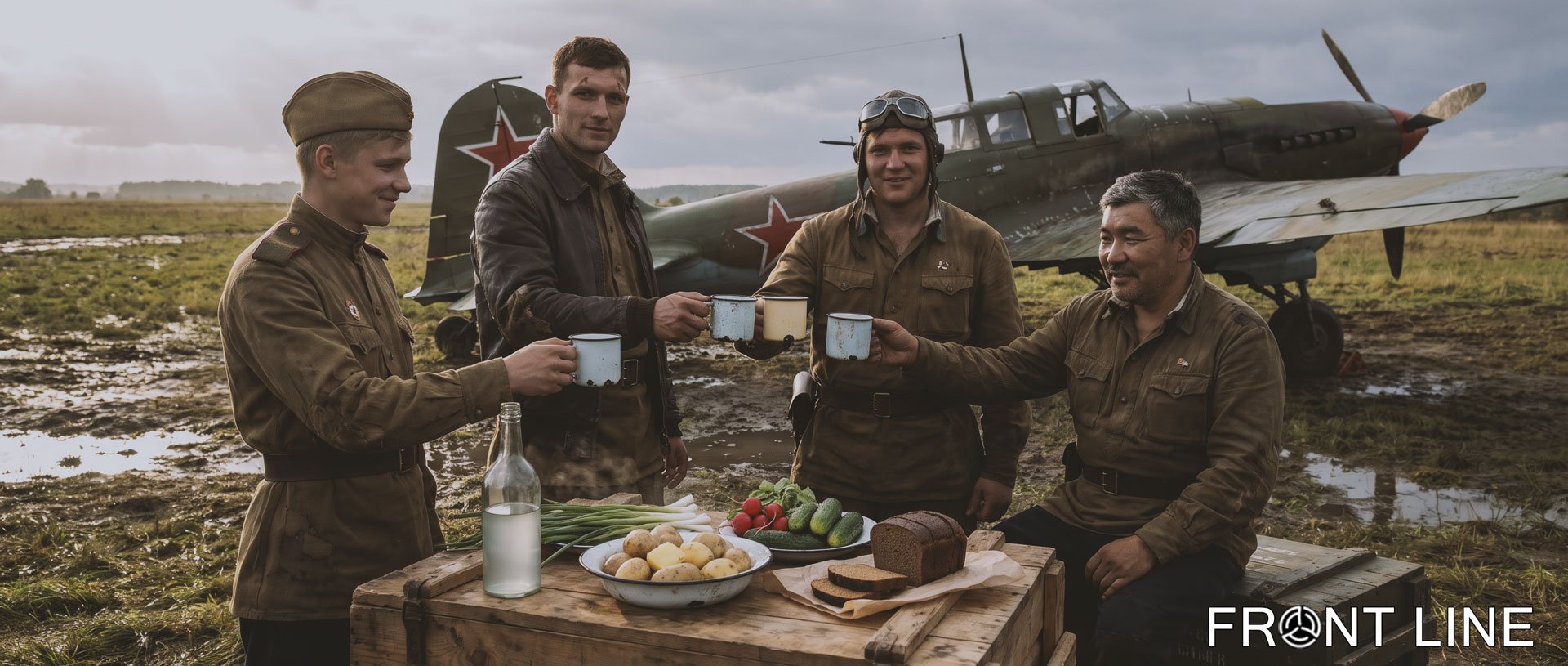

Friends, FRONT LINE is turning three! As you may recall, the first commit for this project was made exactly three years ago. Since then, we have continued working on the project every single day. Over these three years, FRONT LINE has become not just a game server, but an entire world: continuous warfare, a dynamic front line, strategic logistics, personal statistics, teamwork, and a portal that continues to evolve together with the community.
We devoted the third year not only to new mechanics. We worked to make battles deeper, statistics clearer, player interaction more convenient, and the project itself more stable and reliable.
Birthday gift
To celebrate the project's third birthday, we are giving all players a one-week premium subscription.
If you already have an active premium subscription, it will be extended by 7 days. Thank you for being with us — enjoy all the premium features and celebrate FRONT LINE's birthday with us!
The year in numbers
838 commits over the year;
104 pull requests merged into the project: 62 for the backend, 40 for the frontend, and 2 for AviaBot;
27 backend pull requests contained bug fixes;
20 posts published in the “News and Updates” section;
10 guides and informational articles published in the “Server Information” section;
5 new aircraft added to the game roster in the February update;
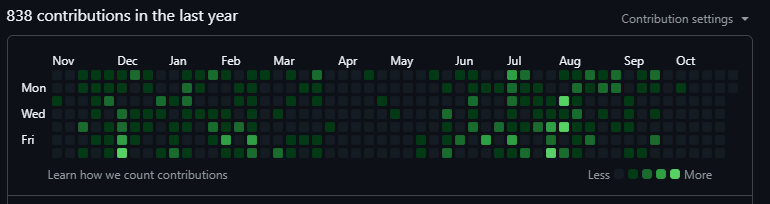
Behind these numbers are hundreds of changes, extensive work with game data, and thousands of lines of technical solutions. But what matters most is not the amount of code, but what players gained from it.
We would like to take a closer look at the changes you received during this eventful year.
Supply became a full-fledged combat mission
We redesigned airborne garrison supply. Strength recovery now depends on the maximum strength of each individual garrison, making transport flights useful in far more situations.
A new cargo delivery method was introduced: dropping containers by parachute. You can now support a garrison even where landing is too dangerous or impossible. The result depends on drop accuracy, while receiving a reward requires successfully completing the route and returning your aircraft to a friendly airfield.
Supply rewards now take into account not only the delivery itself, but also its actual value: distance, restoration of destroyed objects, resource replenishment, and the garrison's position on the front line.
Reconnaissance and victories over strong opponents now earn rewards
A separate reward was introduced for reconnoitering supply columns. Reconnaissance is no longer merely a supporting activity — it has become a meaningful part of teamwork.
Rewards for defeating players were added, with the amount based on the opponent's strength and achievements. Later, PvP rewards received their own clear display in sortie results.
Rewards for contributing to target destruction
A target destruction reward system was launched. Rewards are distributed among participants according to their actual contribution, rather than mere presence in the battle.
Special attention was paid to defense: repelling attacks on primary objectives now earns rewards and team points. Both offensive operations and the successful defense of your own territory are now rewarded.
More opportunities for crews and groups
Proper multi-crew gameplay was restored. Crew members' sessions appear in statistics, and interactions with the primary player and the group now follow a unified tracking system.
Groups were further developed as a mechanic for bringing players together and sharing income. We fixed the award and distribution of points and coins, group roster persistence, and the display of group results.
Fog of war and campaign duration
The “fog of war” on the interactive map was expanded: opponents now receive some information with a delay. This increased the importance of observation, planning, and fair teamwork.
Front-line airfields received special logic: combat aircraft are evacuated, while airfield operations focus on transport aviation, resources, and air defense.
The duration of all mission types was increased. The overall length of the war grew from 45 to 55 days, giving battles more time to develop and the front-line situation more time to change.
Radio communication: a new level of interaction
One of the year's major innovations was radio communication through TeamSpeak 3.
We implemented account linking, registration and relay bots, separate briefing and combat zones, and voice transmission to players from the same coalition within radio range.
Radio communication takes the player's position into account, stops when they leave combat, and features atmospheric noise and interference. After the initial adjustments, radio range was increased from 31 to 41 km, voice volume was increased, and noise levels were reduced.
Players can be in different channels and split into flights and specializations while maintaining communication during a joint operation.
A dedicated service, AviaBot in Rust, was created for radio communication. It receives player positions from Commander through a special channel, identifies listeners by coalition and distance, mixes voice streams, and transmits them through TeamSpeak. It includes a dedicated audio mixer, radio effects, and structured service logging. All of this takes less than 20 ms; otherwise, voice distortion would occur.
The portal also gained:
private messages between players;
administration mailings for important news;
real-time notifications about new messages;
display of players' presence in TeamSpeak;
secure attachments in private messages.
Combat history
Premium account holders gained access to a history of front-line changes throughout a campaign. Layers can be enabled and disabled or reordered, and the history can be browsed manually or played as an animation of events.
History and animation for individual sessions were also added. Sortie maps can now display routes, waypoints, speed, combat events, cargo drops, and other player actions more accurately.
The interactive map gained route-planning tools and a ruler, while the front line is now rendered smoothly using Bézier curves.
More informative profiles and sorties
The pilot's logbook and tanker's service record gained:
a detailed breakdown of losses by type and cause;
a chronology of losses and sessions;
statistics for controllable ground vehicles;
group victories and kill streaks;
distance traveled, average speed, and maximum speed;
maximum altitude and other session metrics.
The mission list now includes the in-game date, team points, and losses for each side. This makes it possible to assess the course of the war not only from the current map, but also from the history of battles.
Fair and consistent ratings
Pilot and tanker rating formulas were unified with those used in personal profiles. We fixed player search, rating positions, the daily “best of the day” rating, and time display across different sections of the website.
Statistics became not only more detailed, but also faster: profile loading was accelerated by up to 20 times, and the losses section by up to 10 times.
Vehicles, maps, and balance
The February update added 5 aircraft to the game roster:
Il-2 (1944 model);
La-7 (Series 1);
P-51B Mustang;
Mosquito F.B. Mk.VI ser.2;
Ta 152 H-1.
A mechanism for retiring obsolete vehicles was added. The rules for conditionally free vehicles were revised so that players without in-game currency can continue participating in the war, while the absence of risk does not become an advantage for wealthy profiles.
Several major revisions to the game set were made during the year: vehicle costs, ranks, combat loadouts, modifications, vehicle introduction and retirement dates, rewards, and specialization economics.
Kuban received a substantial update: the map graph, starting positions, settlements, airfields, objectives, and factory locations were revised. Odessa, game missions, and object layouts were also updated separately.
A unified style and more features
The project website was given a unified visual style based on archival documents from World War II. The main statistics, profile, mission, session, and game set pages were updated.
The game set was divided by specialization and gained clearer vehicle cards, availability information, and improvements for mobile devices.
Custom avatar uploads were added to personal accounts. Development continued on the premium subscription, billing, payment services, and administrative tools.
We also improved page descriptions for search engines, mobile interfaces, navigation between related sections, and the display of premium feature restrictions.
Project knowledge base
Over the year, 10 guides and informational articles were published in the “Server Information” section.
We explained to players:
how railway stations support factories;
how to act when encircled and rescue encircled garrisons;
how garrison supply works;
the role of military transport aviation;
how weather affects missions and tactics;
how the server's main rules work;
how the game set, ranks, deposits, and vehicle access work;
how maps change and how the winner of a war is determined;
how to set up radio communication;
This is an important area for us: a mechanic only becomes truly accessible when players can not only encounter it in battle, but also understand its purpose in advance.
Quality and reliability improvements
This year, 27 backend pull requests contained fixes. They covered the game economy, reward distribution, sortie processing, statistics, ratings, supply, groups, billing, maps, and user interfaces. Separate fixes were also made to the frontend and AviaBot.
However, our reliability work was not limited to bug fixes:
the server software was migrated to .NET 10, and the frontend to Next.js 16;
data caching was expanded and database queries were optimized;
the number of service messages in the in-game chat was reduced;
handling of the game server's control connection was redesigned;
deferred command and message queues were introduced;
restrictions on sensitive operations and secure image processing were added;
daily automatic database backups were configured.
Another major milestone was moving almost the entire infrastructure to new hardware with a new provider. Its goal is to reduce the network problems that prevented players from connecting to the server and make the project more stable.
Four stages of the year
November 2025 — January 2026
Groups and multi-crew gameplay, the “fog of war,” loss tracking, expanded statistics and user services, and the foundation of a new payment system.
February — April 2026
Five new aircraft, vehicle obsolescence, combat and session history, loss analytics, improved sortie maps, and a unified archival style for statistics.
May — July 2026
Parachute supply, radio communication and the dedicated AviaBot service, reconnaissance and PvP rewards, target rewards, migration to .NET 10, expanded profiles, sortie animations, and avatar uploads.
August — November 2, 2026
The Kuban overhaul, longer wars, private messages and mailings, the infrastructure migration, automatic backups, and preparation of the game set for War 25.
More about squads
We had hoped to introduce squads for the project's third birthday, but their release has been delayed. Squads are currently still under active development, and we hope to deliver this update soon.
The system's functionality and requirements turned out to be truly extensive. We need more time to complete development and properly prepare squads for release. Therefore, they are not included in the published innovations listed above.
Thank you for your patience and for waiting for this major feature together with us.
Thank you for supporting the project!
We extend special and heartfelt thanks to the members of “Committee-S,” who provide monthly funding for FRONT LINE. Your ongoing support helps the project survive, grow, and bring new features to players.
Over the committee's nine months of existence, including website sales, the project received funding of approximately 950,000 rubles. Of this amount, 100,000 rubles came from website sales.
These ruble amounts do not include international support. According to statements for February–September 2026, USD 921.95 was received in the project's international account. After the PayPal fee was deducted, the amount was USD 921.05.
A huge thank-you to our international donors! Your support from different countries helps us grow and demonstrates that the project has a truly international community.
Anyone can join “Committee-S.” Monthly support from its members is an investment in FRONT LINE's future and in new features that all players will be able to enjoy.
Three years.
The project's third year was a year of major connections: between aviation and logistics, reconnaissance and rewards, combat and statistics, players and teams, and the game server and portal.
We gained a better view of each sortie's history. We gained new ways to influence the war. We learned to communicate in new ways. And we did a great deal of work that is not always visible on screen, but is essential for the project to continue surviving and evolving.
FRONT LINE is the people who write the shared history of a unique project every day. Thank you all! Thank you to everyone who flew, drove a tank, supplied garrisons, reconnoitered targets, reported bugs, suggested ideas, helped newcomers, and supported the project.
Happy birthday, FRONT LINE!
-
 1
Create an account or sign in to leave a review