



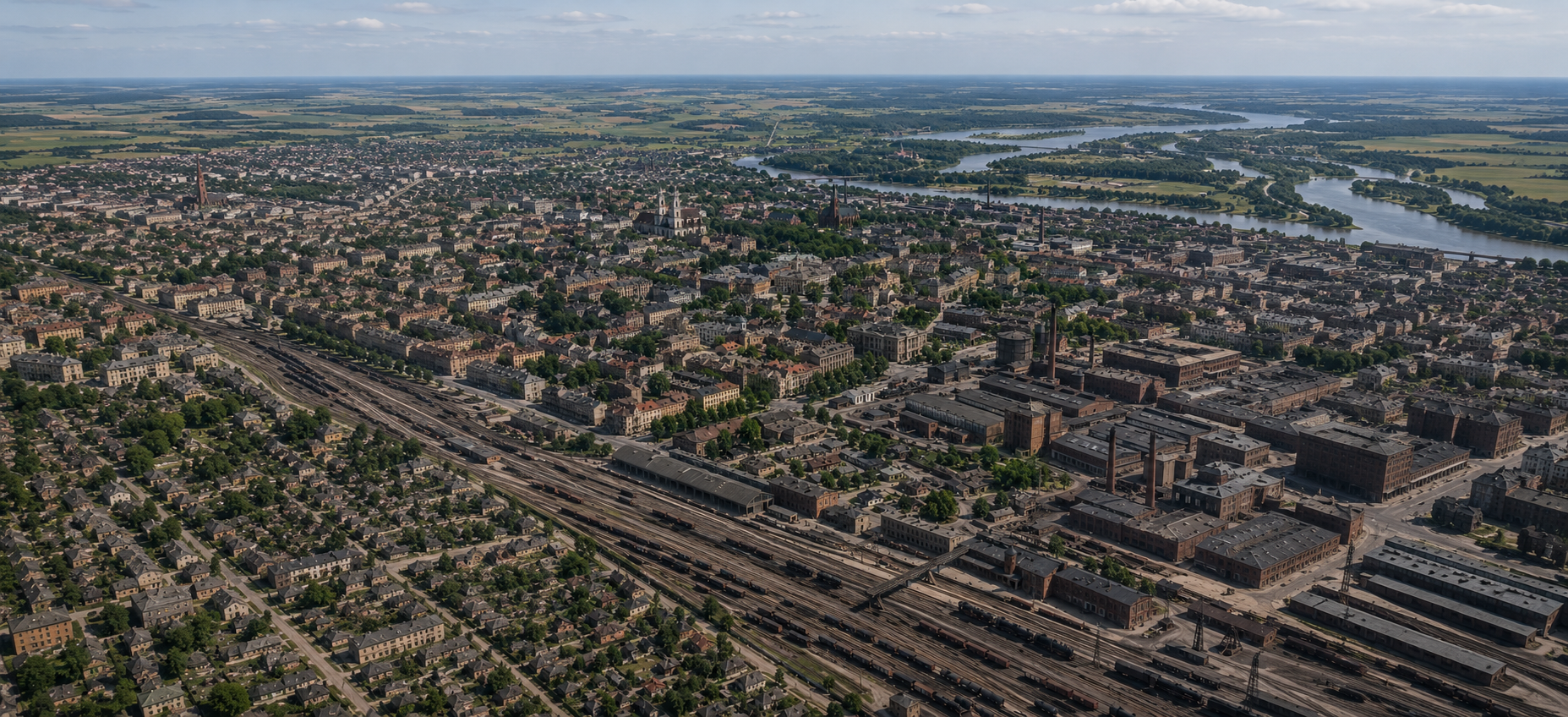

One of the unique features of the Front Line server in IL-2 Sturmovik is that virtually every object in the game world has value. Unlike other projects, where most buildings serve merely as decoration, on our server, the surrounding world is a fully-fledged part of the game mechanics.
Every destroyed object is counted in the statistics system, earning players experience, in-game currency, and contributing to their overall profile development. This means that even a short combat mission or tank excursion can be beneficial for your team and your personal progress.
A world where every object has meaning
On the Front Line server, statistics track absolutely every object that can be destroyed by players. This applies not only to strategic targets but also to regular infrastructure.
Every settlement, regardless of whether it's involved in ongoing combat (marked on the interactive map), every bridge, railway junction, port, warehouse, or industrial facility—all have their own value and are accounted for by the server's statistics system.
Destroying any such object rewards players with experience points and in-game currency, which are used to advance their rank and further progress within the gameset system.
This means that even during a routine flight or return to the airfield, it's possible to spot a target whose destruction will yield significant benefits.
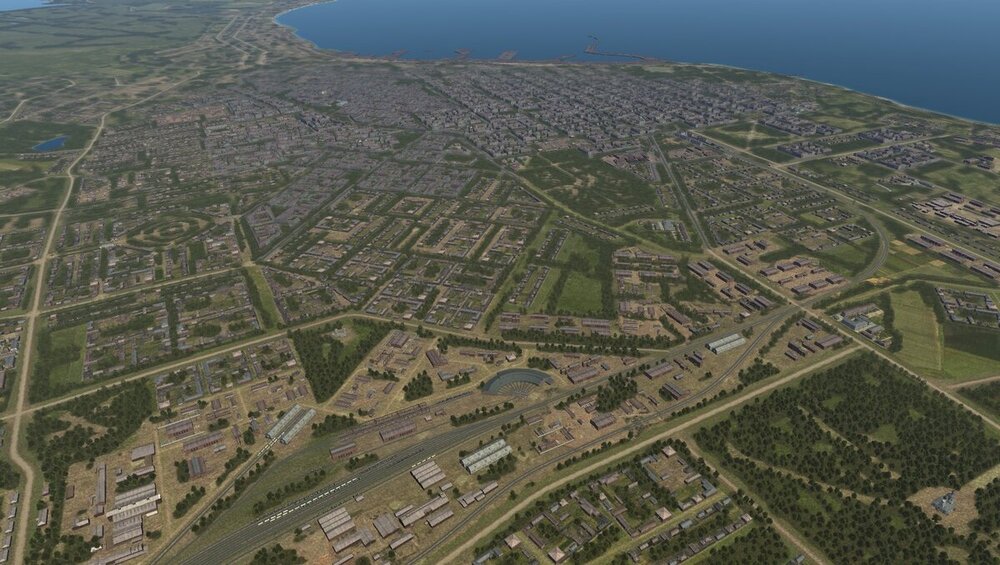
Today, we'll examine this mechanic using the port city of Odessa.
Settlements consist of more than just residential buildings
If you carefully examine any city, even a relatively small one, you'll notice that it consists of a multitude of different structures.
In addition to the usual residential buildings, there are also barns, outbuildings, warehouses, hangars, workshops, and industrial facilities. Each has its own in-game value and is counted separately.
For example, a residential building is worth 4 points and 42 units of in-game currency, while a warehouse, which is usually dark brown, is worth 70 points and 90 units of in-game currency.
Residential buildings have roughly the same value, so destroying several of them yields a stable reward and simultaneously reduces the overall strength of the settlement's garrison, provided it participates in the "battle grid" displayed on the interactive map. Otherwise, the settlement has no garrison, and you only receive income without affecting the enemy's economy.
Industrial areas
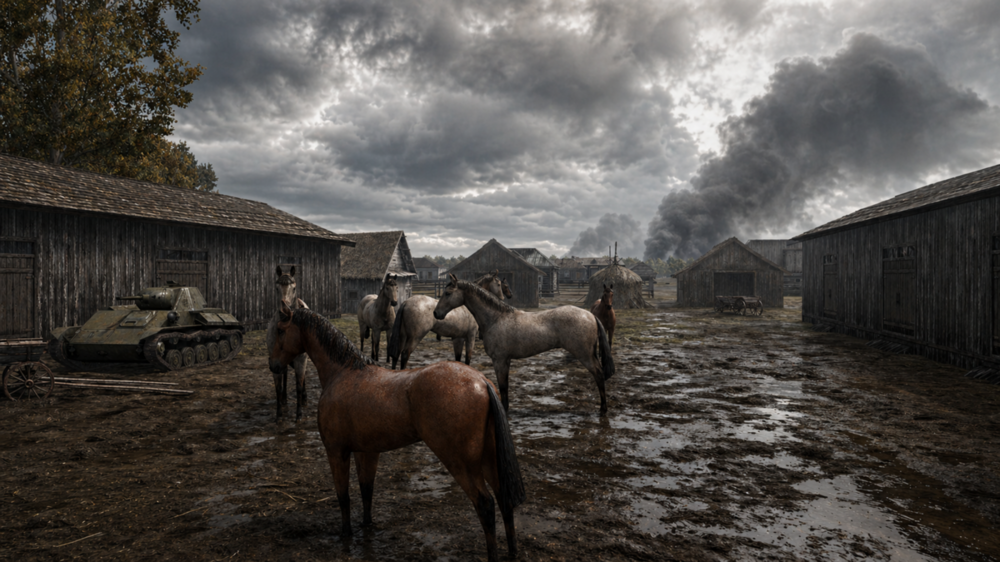
Industrial zones can be found in larger cities. They are typically easily identified by large, dark-brown buildings or large gray hangars.
These structures are significantly more valuable than regular residential buildings. Destroying them yields more game points and currency, with the average value of such structures ranging from 20 to 100 points and 50 to 100 in-game currency.
This is why experienced attack aircraft pilots often focus on destroying industrial infrastructure.
Railway junctions
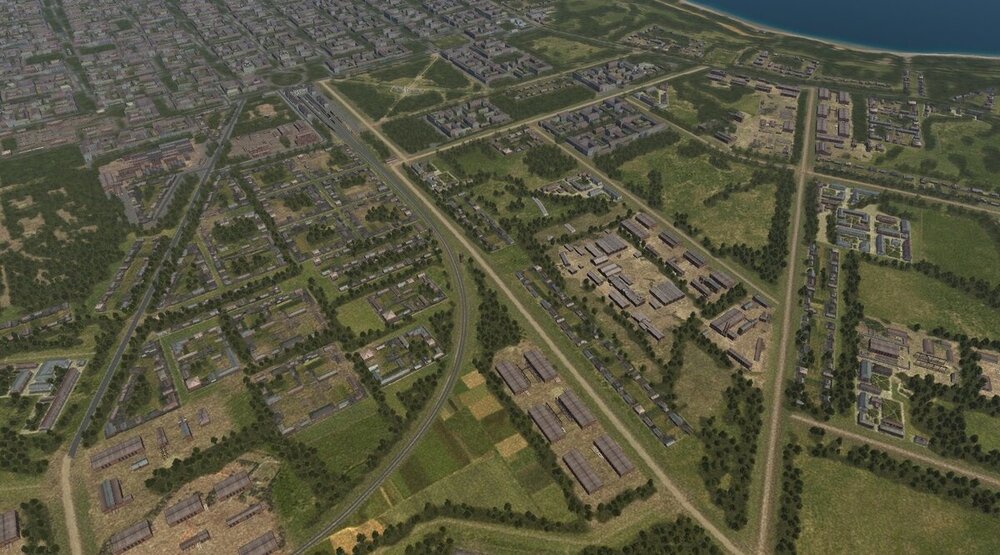
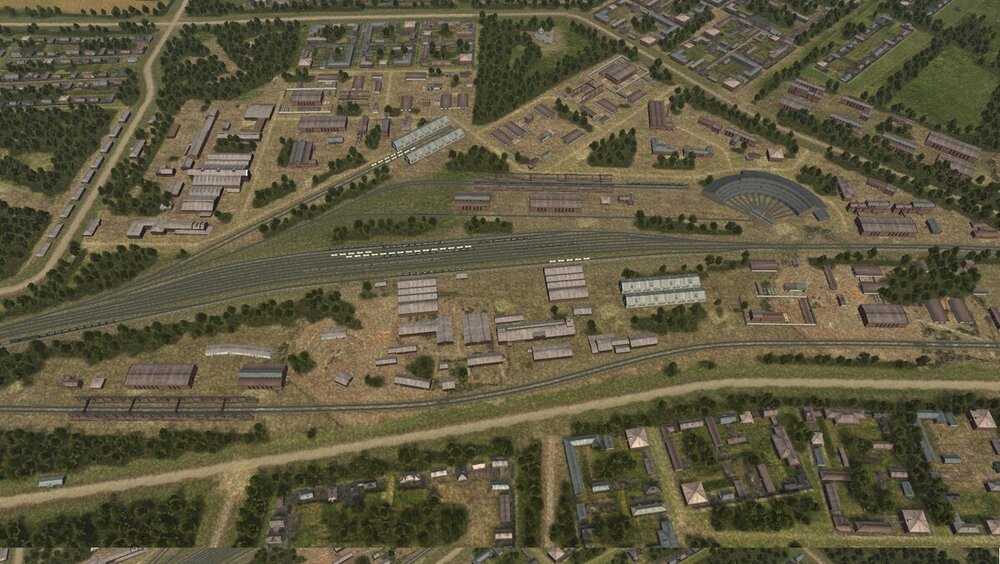
Many settlements are home to railway stations and junctions. These are crucial elements of the frontline transportation system.
Locomotives, freight cars, platforms, warehouses, utility buildings, and other railway assets can be found here. The value of railway infrastructure varies from 10 to 50 points and from 50 to 150 in-game currency.
All these objects have their own value and are accounted for by the server system. Locomotives and railcars are valued the same as similar equipment at railway stations or in supply trains. Currently, a locomotive is worth 50 points and 112 in-game currency, and a railcar is worth 12 points and 67 in-game currency.
Even environmental elements—small structures, warehouses, or station equipment—also have a value and are taken into account when calculating mission results.
Ports and ships
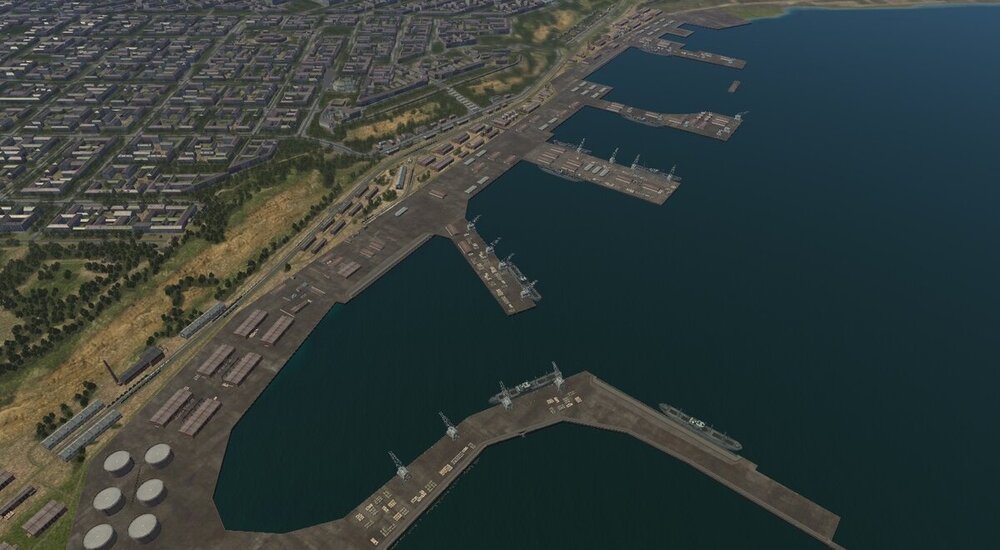
Seaports are found on some maps. These are among the most valuable assets on the Front Line server.
In addition to port infrastructure, they also house transport and military ships, warehouses, piers, and various support structures.
Destroying these targets yields significantly more points and in-game currency than most regular targets. For example, a transport ship is worth 430 points and 1,170 in-game currency. However, such targets are typically well-defended by enemy aircraft and require larger bombs to destroy.
Don't miss the opportunity
One of the server's interesting features is that useful targets can be found virtually anywhere on the map.
Even when flying over a small, unnamed village or driving a tank far from the front lines, carefully examine your surroundings. Often, you'll find buildings or objects there that, when destroyed, will earn you additional experience points and in-game currency.
This approach makes the game world significantly more vibrant. Players stop viewing the map as a set of predetermined objectives and begin to perceive it as a unified system, where any object can impact their career development.
The influence of objects on player development
Every destroyed object isn't just another statistic; it directly impacts the speed of your profile development.
The points earned increase your pilot or tanker rank, and the in-game currency earned allows you to use more modern vehicles, unlock new modifications, and combat loadouts. Therefore, effectively searching for and destroying important objects is often just as rewarding as participating in aerial combat.
Conclusion
On the Front Line server, the surrounding world is a fully integrated part of the gameplay. Every building, bridge, railway facility, and ship has its own value and is accounted for by the statistics system.
That's why experienced players always carefully study the terrain and seize every opportunity to complete additional combat missions. Sometimes, a small raid on an industrial zone or railway junction can be just as rewarding as destroying an enemy aircraft.
The better you know the map and the locations of important objects, the more effectively you'll complete combat missions, advance your rank faster, and contribute to your team's overall victory.
Create an account or sign in to leave a review
There are no reviews to display.