



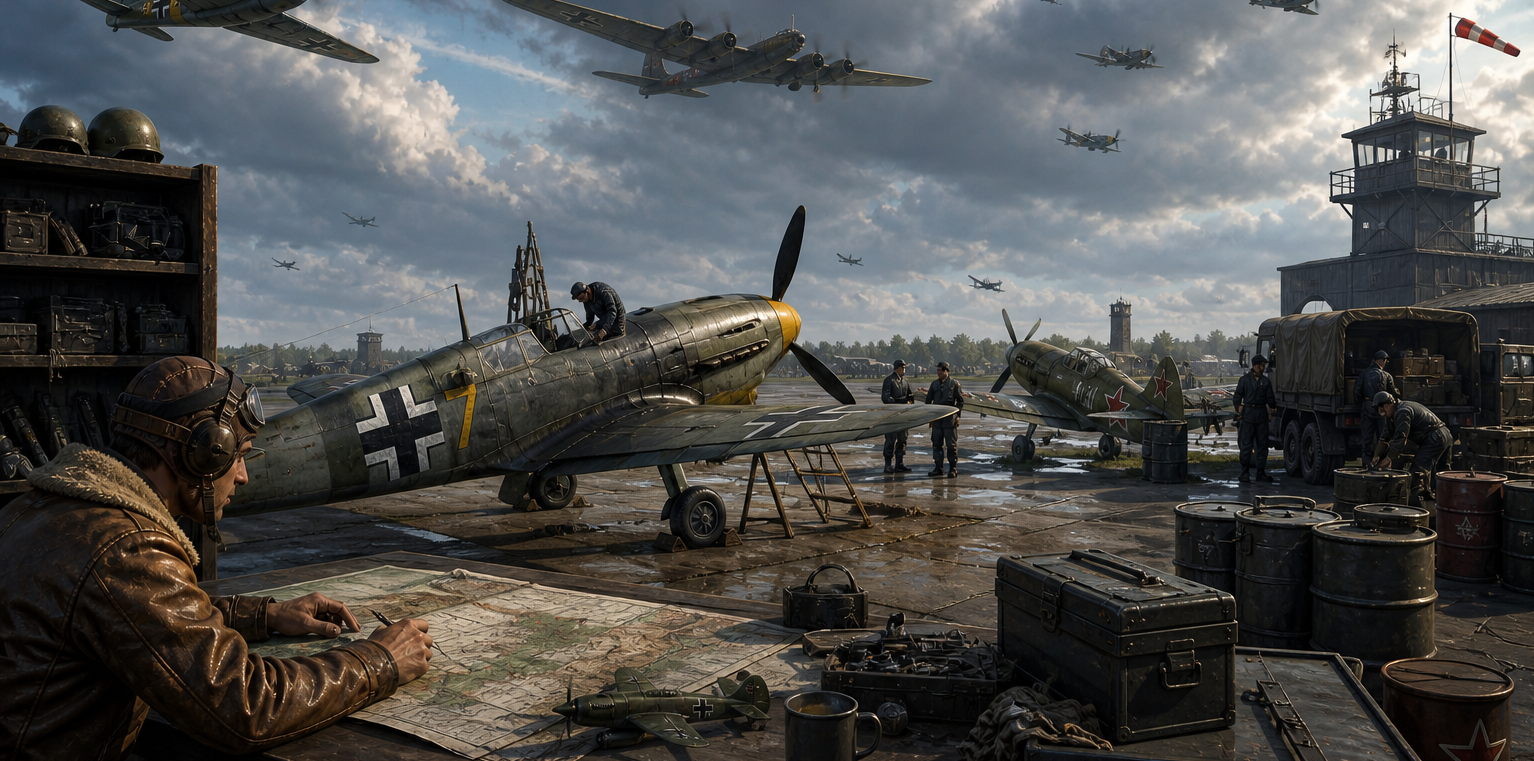

The gameset on the Front Line server in IL-2 Sturmovik is a kind of virtual player garage, where access to vehicles, their modifications, and combat loadouts directly depends on two factors: rank (experience) and financial status. This is one of the server's key mechanics, shaping not only the variety of vehicles in battle but also the overall balance of the confrontation.
Where is the game set located and how to work with it?
The gameset is located on the Front Line project portal, at the top of the website, as well as its visual display in a Google spreadsheet. By clicking this section, users are taken to an interface where they can view the available vehicles and their specifications.
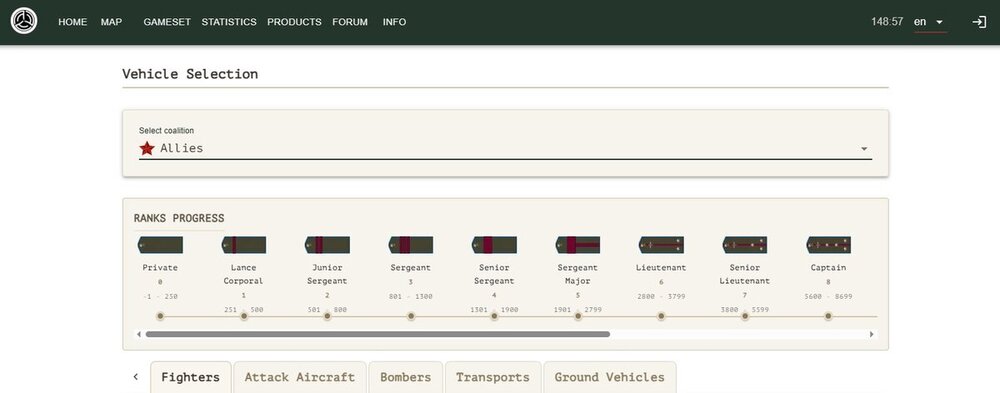
After logging in and completing at least one combat mission, additional information becomes available: a progress bar displaying the player's current rank, in-game currency balance, and overall system status. The option to enable a "Show only available vehicles" filter also appears, which hides all vehicles unavailable by rank.
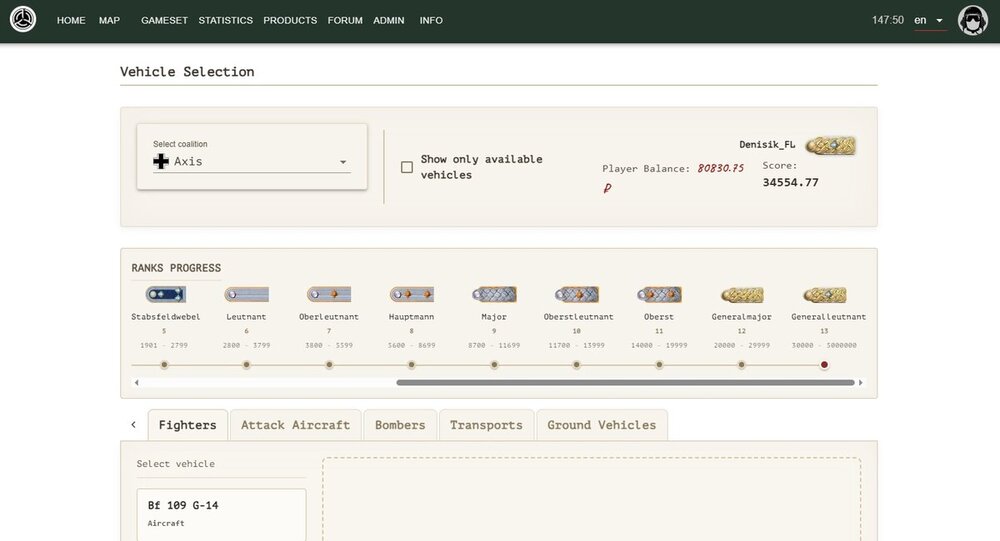
However, it's important to remember: even if the vehicle itself is available, its modifications or combat loadouts may require a higher rank or additional resources. Therefore, it's important to carefully consider the specifications when choosing.
Historical approach and game assumptions
The server is committed to historical accuracy. All equipment—both aircraft and ground vehicles—appears on the front lines according to their actual arrival dates. This applies to both weapons and available combat loadouts.
Game balance considerations are also taken into account. For example, some aircraft may be available earlier than their historical counterparts, but their more powerful weapon variants are only unlocked at a later date.
A good example is the situation with the Ju-87 D-3 dive bomber, where the aircraft essentially replaces an earlier modification of another: the basic version is available immediately, but its improved combat capabilities are released later, in accordance with historical dates.
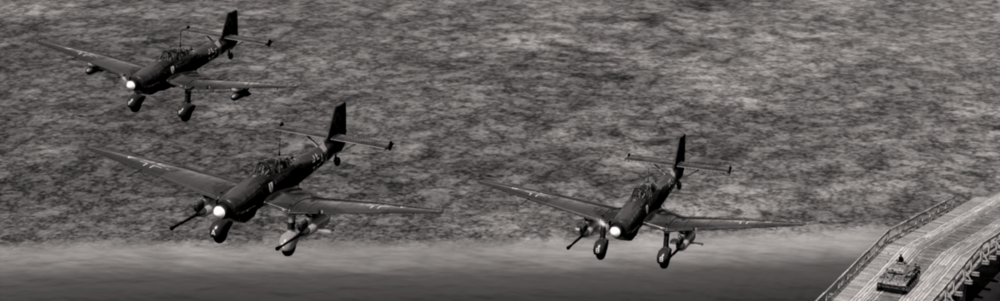
This approach allows us to maintain balance while simultaneously conveying the development of technology over time.
Division of equipment into divisions
All vehicles on the server are divided into three categories: inexpensive, mid-range, and expensive. This division is based not only on technical characteristics but also on their effectiveness in server conditions.
The evaluation is comprehensive: speed, armament, bomb load, survivability, and combat effectiveness are taken into account. For example, the He-111 H-6 is in the cheapest category because it carries the lightest bomb load and has weak defensive armament. Meanwhile, the Ju-88 is in the expensive category: despite its comparatively weak defensive armament and shorter range, it has a significantly greater bomb load and higher speed.
Thus, the cost of a vehicle reflects its actual value in gameplay, not just its formal characteristics.
Conditionally free equipment
The free-to-play vehicle system deserves special attention. It is marked with a special green icon in the list.
Its primary purpose is to allow players to continue participating in battles even without in-game currency. However, such vehicles only become free if the player lacks sufficient funds to rent them.
This solution prevents abuse: players with sufficient resources will not be able to use them for "risk-free" missions, while newcomers or players without funds are not left without the opportunity to play.
Over time, the list of such vehicles is updated: outdated models are retired and replaced by more modern ones.

Selection of equipment and cost calculation
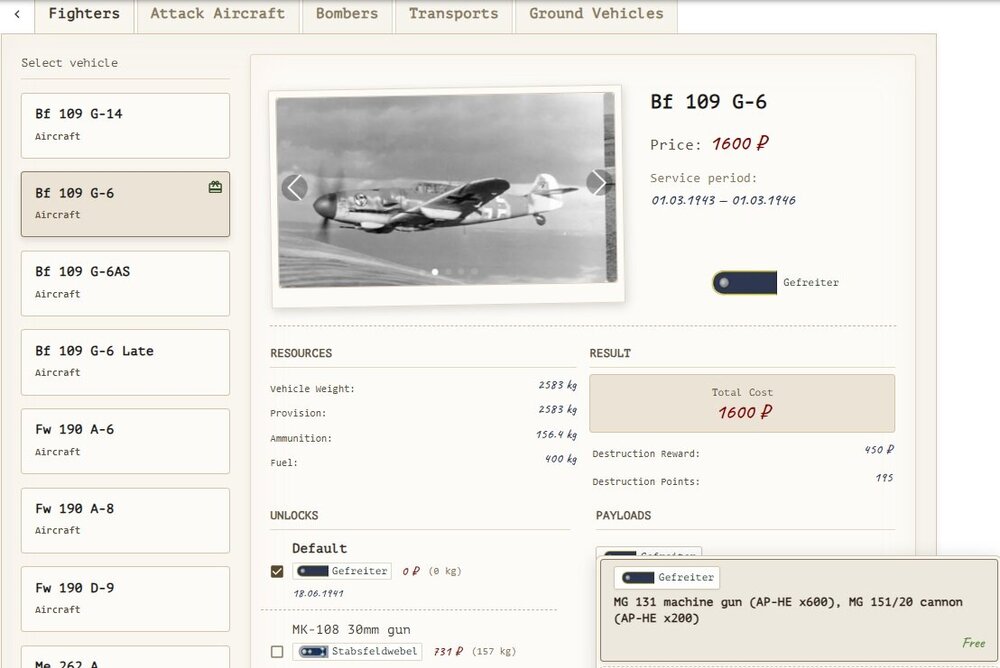
When selecting an aircraft or tank, a detailed window opens with full information: available modifications, combat loadouts, rank requirements, and the final cost.
For the correct selection, the following sequence is recommended:
First, select the vehicle, then the modification, and then carefully review the available combat loadouts. The selected configuration determines the final deposit amount.
On the right side of the interface, a list of weapons is displayed, along with the price and required rank. The final cost of the selected configuration is shown just above.
Additionally, the player will receive points and in-game currency for destroying this vehicle.
The deposit principle
A key feature of the gameset is that vehicles are not purchased — a deposit is placed for them. This means that when you return the vehicle, almost the entire deposit amount is refunded to you (except for small operating fees).
If you successfully complete a flight and land, most of the amount is returned. For example, you took a plane with a deposit of 5,000 units of in-game currency, completed the flight, and landed successfully. In this case, almost the entire amount is returned to you, except for maintenance costs. These costs are calculated based on the flight duration.
If the vehicle is damaged, the refund amount is reduced. For example, a plane with a deposit value of 5,000 units of in-game currency, if 50% damaged, will return approximately 2,400 units. The difference is explained by the fact that, in addition to the degree of damage, wear and tear of the equipment is also taken into account.
It's important to note that the less damage the vehicle sustains, the more funds are returned to your personal account.
This encourages careful play and careful handling of the vehicle.
Checking before the start of the battle
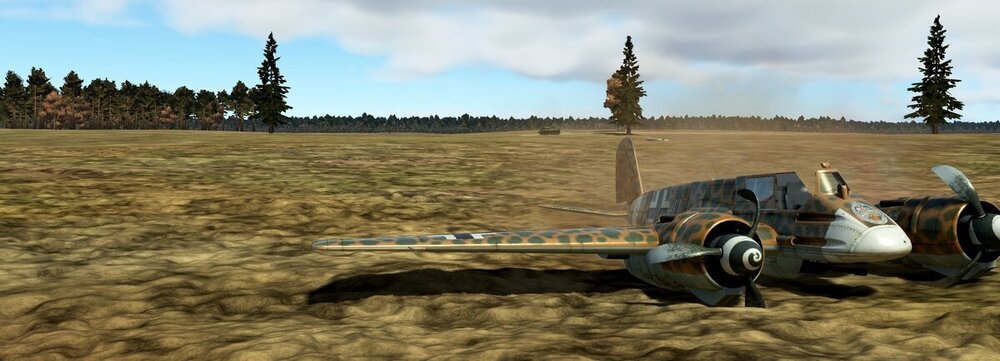
After spawning at the airfield, the server automatically checks the selected vehicle and its configuration. The system compares the rank and cost requirements with the player's current capabilities.
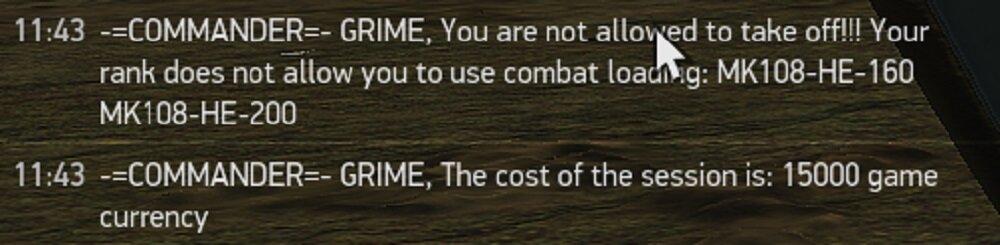
If everything matches, the player can take off. Otherwise, a ban notification will appear in the chat.
Attempts to take off with unavailable loadouts will result in removal from the server without loss of funds or points. For ground vehicles, removal occurs immediately, so it's important to check availability in advance.
Separate player profiles
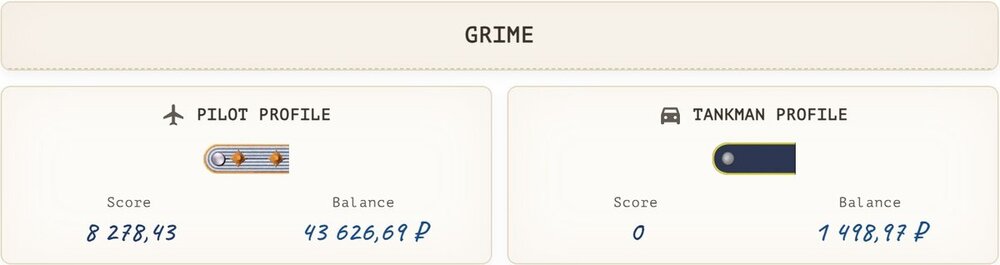
Each registered user has two independent profiles: aircraft and tank.
They are developed separately, have their own statistics, and do not overlap. This allows the player to focus on one chosen area or develop both simultaneously.
Conclusion
The Front Line server's game set is a well-thought-out system that integrates vehicle access, economics, and player progression. It makes gameplay more meaningful: it's not just about combat skill, but also about choosing the right vehicle, managing resources wisely, and understanding available options.
Tip: If you're not yet proficient with vehicles, choose cheaper options. Don't go all-in—this will allow you to gradually accumulate capital without unnecessary emotional stress.
By mastering the game set, players gain a significant advantage and begin to better understand the server's logic, which directly impacts their success in each mission.
Create an account or sign in to leave a review
There are no reviews to display.